
Canada needs national standard on palliative care, experts say
There are rules for how people can die, but not for how they are cared for while dying.


Before expanding the use of psychedelic-assisted therapy for terminal patients, some experts say Canada must first ensure universal access to high-quality palliative care.
Palliative care physicians worry the growing debate over experimental end-of-life therapies risks obscuring a more fundamental question: are dying patients receiving the timely pain control, home supports and specialist care needed in the first place?
Dr. Romayne Gallagher, a board member of the Canadian Society of Palliative Medicine (CSPM), which represents 700 physicians and care providers, says Canada has yet to guarantee consistent access to that care.
Passed in 2017, Bill C-277 called for a federal framework on palliative care, with a progress report due in 2023. That report outlined broad goals and funding amounts, but there are no enforceable standards.
By contrast, MAID — medical assistance in dying — operates under a national legal framework with standardized safeguards.
Canada created national rules for how people can die, but not for how they are cared for while dying.
The tension between psychedelics and MAID has been brought into focus by the case of Pete Pearson, a 75-year-old Ontario man who was diagnosed in 2018 with idiopathic pulmonary fibrosis, a progressive lung disease with a mean survival rate of three to five years.
Pearson’s request to use psilocybin under the Special Access Program was denied in July 2025 by Health Canada after an 11-month wait.
He was then approved for MAID within weeks.
Theraspil, a Canadian non-profit organization working to facilitate legal access to psychedelic-assisted therapy, launched an awareness campaign around his case.
After the denial, Pearson appealed for a Section 56 — a personal exemption from the minister of health to use an illegal or unavailable drug — and when he didn’t get a reply by the end of December, he underwent psilocybin-assisted therapy anyway.
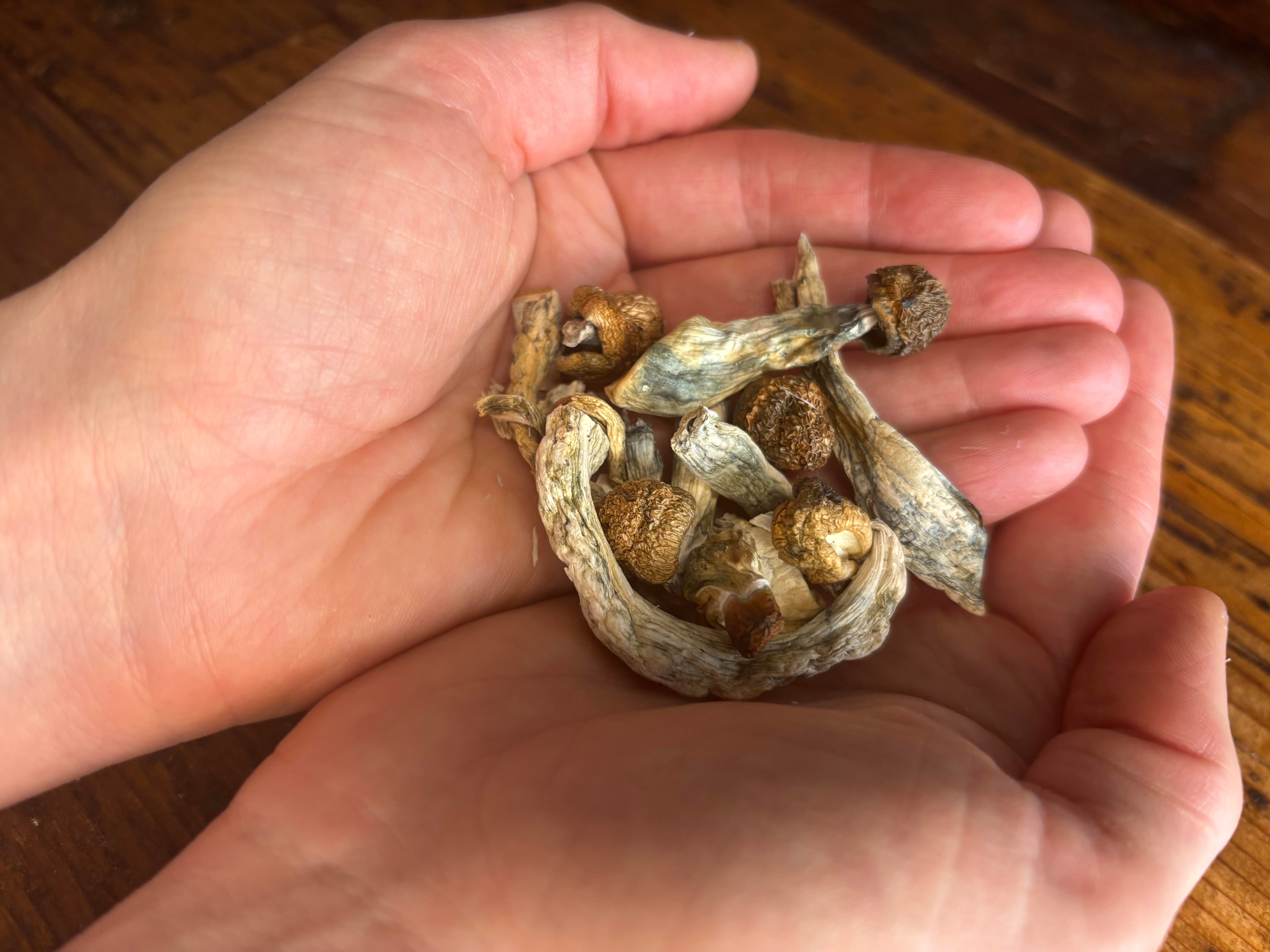
Pearson acquired psilocybin on his own and hired a licensed therapist and a sitter, who came to his house for the therapy session, which lasted about seven hours.
His son, Blake Pearson, said it was helpful in alleviating his existential anxiety.
Gallagher argues palliative care should carry the same clarity and accountability as MAID, so patients aren’t forced to seek treatment outside the Health Canada framework.
“(The federal government) voted three times, all parties agreeing ‘we need a strategy,’” she said. “We have seen very little of a strategy. We have papers that talk of a national strategy.”
Someone who lives in one province should be able to access the same level of palliative care as someone who lives in another, she said.
“What (the feds) do because of the damn politics is sort of say, ‘here is a lump sum of money for home care and palliative care and whatever.’ But they don’t really say, ‘And I want to see what you guys do with this, I expect you to do A, B, and C.’”
Now retired after a 30-year career, Gallagher is a founding director of the Division of Palliative Care at the University of British Columbia and helped establish undergraduate, postgraduate and inter-professional teaching there. She says palliative care should be incorporated more broadly into medical school curriculums across the country.
“Palliative care is an extra layer of support that recognizes that you need treatment for symptoms,” she said. “But most of our other medical therapy is focused on the tumour or the disease process, you’re not focused on the person and their illness experience.”
And palliative care should be started right at diagnosis, not when all other options have been exhausted.
“We call palliative care a set of attitudes, skills and knowledge that enable people to help people on the journey with serious illness,” said Gallagher. “It’s often on the journey to the end of their life but it’s not always. We also see people who have a very serious cancer but go on to be a cancer survivor.”
Psychedelic-assisted therapy is administered under therapeutic supervision and uses drugs like MDMA, psilocybin and ketamine, along with talk therapy and follow-up integration sessions, to treat patients suffering treatment resistant depression, complex PTSD and existential anxiety related to terminal illness.
Patients who have undergone psychedelic-assisted therapy have reported experiencing a sense of connectedness, acceptance and peace around their mortality.
Psychedelics may ease suffering but experts see them as a tool palliative care providers can use — effective but just one arrow in the quiver.
Without consistent national standards for palliative care, Gallagher argues expanding access to psychedelic therapy risks addressing one symptom of a system that remains uneven at its foundation.
Very important discussion