
‘What the system didn’t do’: Why one terminally ill patient turned to psilocybin outside Health Canada's framework
Pete Pearson may have broken the law by taking psilocybin to treat his existential anxiety, but son Blake says it was worth it

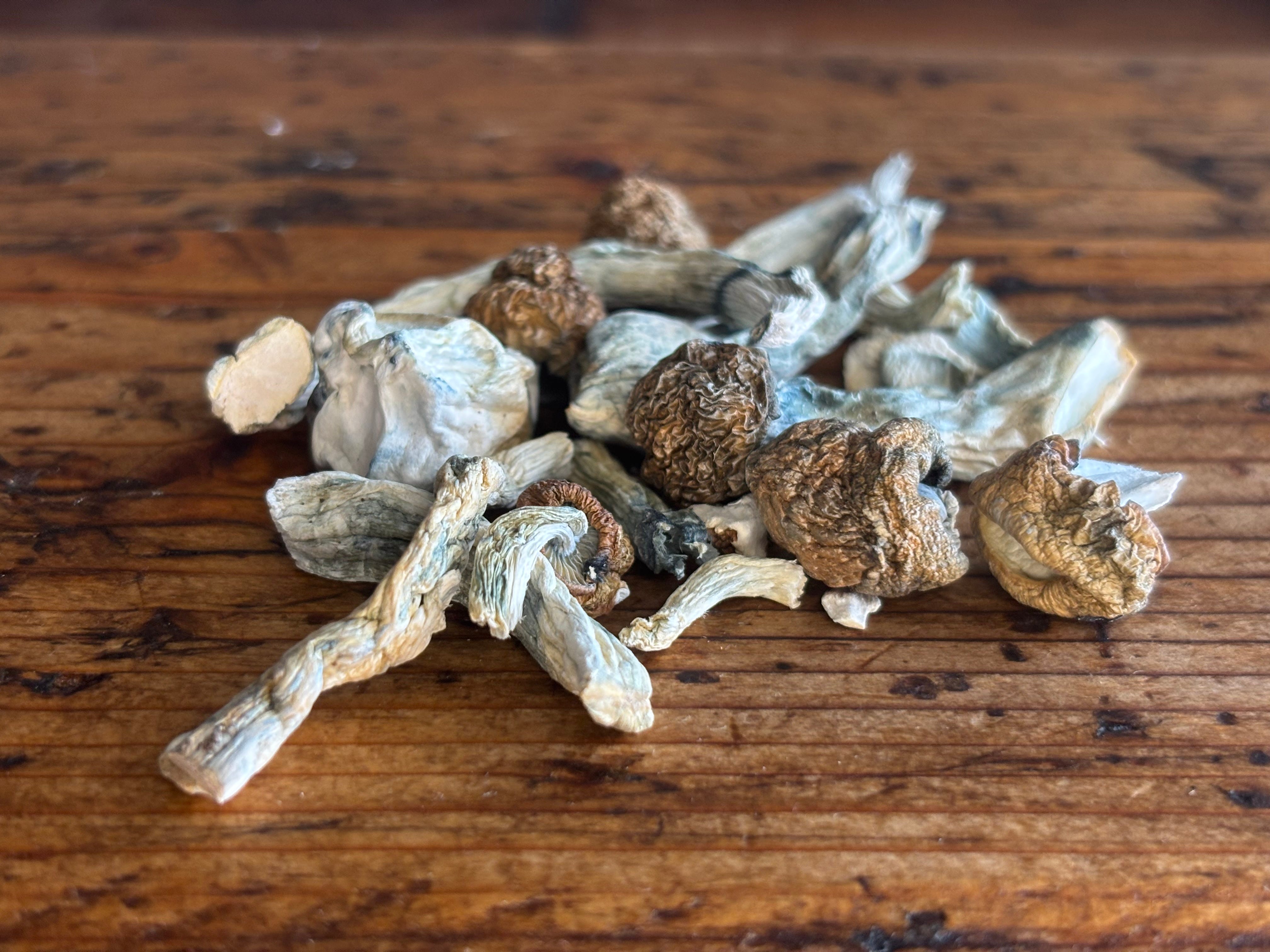
After Health Canada denied his request for legal access to psilocybin as part of psychedelic-assisted therapy, Pete Pearson decided to undergo the treatment anyway, outside the federal framework.
His family says that decision has greatly improved his quality of life.
Advocates argue it’s a decision patients shouldn’t be forced to make.
“The story isn’t necessarily what the patient did, it’s what the system didn’t do,” said John Gilchrist, communications director for TheraPsil, a Canadian non-profit organization working to facilitate legal access to psychedelic-assisted therapy.
“From a legal perspective, this situation highlights the gap between regulation and reality.”
Now 75, Pearson was diagnosed in 2018 with idiopathic pulmonary fibrosis, a progressive scarring of the lungs, which has a mean survival rate of three to five years. In 2024 his medical team applied to Health Canada under the Special Access Program to legally obtain psilocybin — better known as magic mushrooms — to treat existential anxiety and depression associated with the terminal diagnosis.
Under the SAP, a licensed therapist works with a medical practitioner to apply for access to pharmaceuticals that are not approved or otherwise available in Canada. The program is currently used for patients suffering from treatment resistant depression, complex PTSD or existential anxiety around death and dying after receiving a terminal diagnosis.
After an 11-month wait, the denial from Health Canada came in July 2025, the reason being Pearson’s illness was not deemed to have progressed enough. On the other hand, he was approved for MAID — medical assistance in dying — in a matter of weeks.
Pearson’s medical team then appealed directly to the federal minister of health under Section 56, which is a personal exemption. When they didn’t receive a reply by the end of the year, he decided to undergo the therapy anyway, despite the fact doing so was illegal without the authorization.
“It couldn’t have went any better,” said son Dr. Blake Pearson, who is a family physician focused on cannabinoid medicine but is not involved in his father’s care.
In early January, a licensed therapist hired by the family and a sitter came to Pearson’s home in southern Ontario where he consumed a macro dose of five grams of psilocybin, under supervised care.
Donning an eye shade and headphones playing curated, transcendent music, Pearson’s journey lasted about seven hours.
“They came to the house and had a little pre-ceremony to kind of set the intention,” said Blake. “They had been doing that in the prep work, ‘What do you want to get out of the experience? What are you struggling with?’ They set the intention then they made a nice comfortable space for him …overlooking the water, and then … for someone who has never been exposed, he tolerated it just fine.”
Because the treatment was not authorized by Health Canada, the psilocybin was obtained independently.
In the weeks after the treatment, Blake said he has seen a difference in his dad.
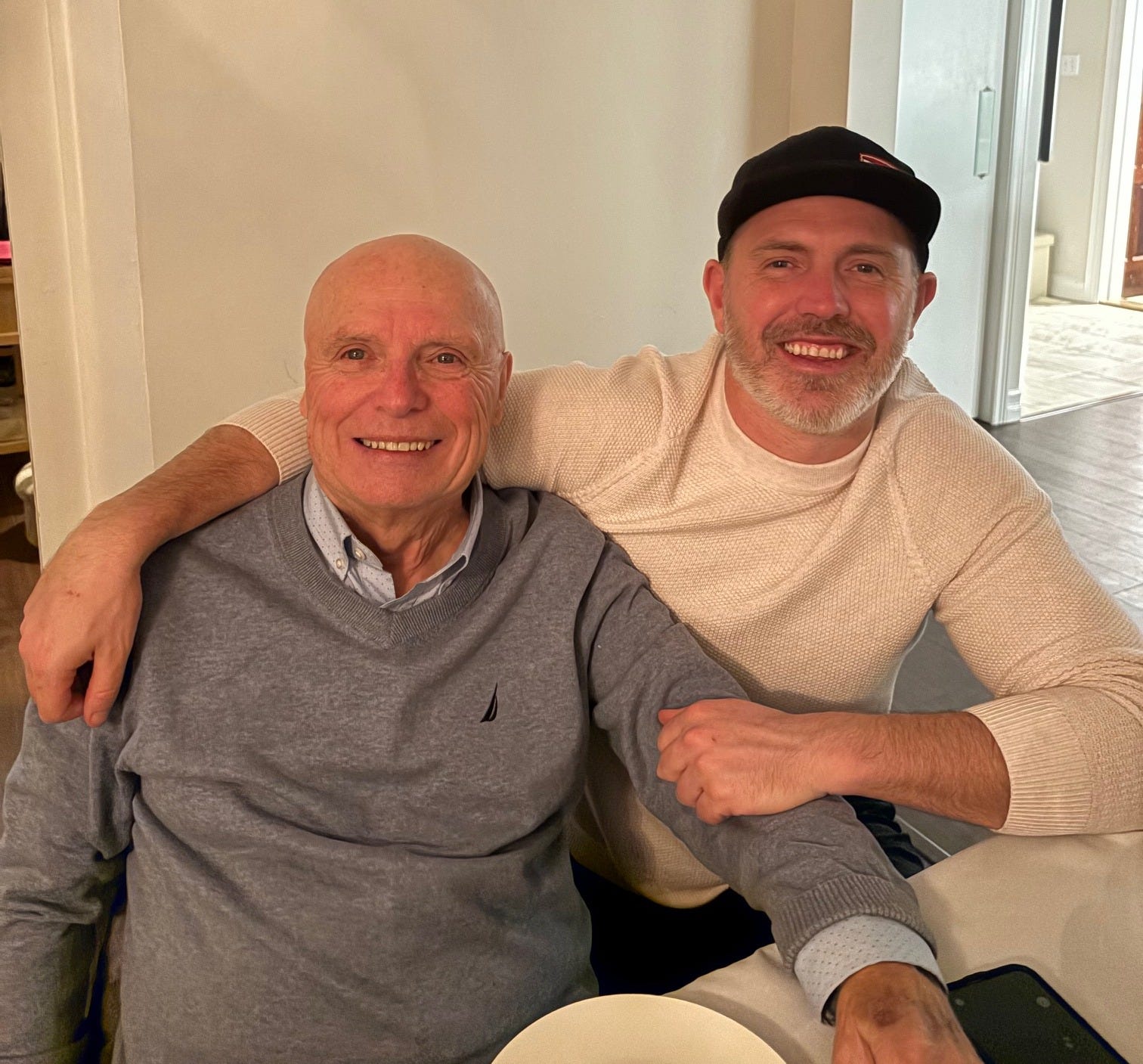
“In his own words, he’s just lighter. He feels like a weight has been lifted off his chest. He’s not as fearful,” he said.
“Coming off the mushrooms he had expressed how well he was feeling, but it has persisted. He hasn’t done the integration session yet with the counsellor but you can just see it. The really cool thing, in the transcripts … he was just repeating, ‘Let it go, it’s OK, you’re safe here, you can let it all go,’ and that transcript really reflects how he’s feeling, he’s let it all go.”
Administered under therapeutic supervision, psychedelic-assisted therapy uses drugs like MDMA, psilocybin and ketamine, along with traditional talk therapy and follow-up integration sessions to treat patients. Psychedelics are known to alter our mood and perception of consciousness. Individuals who have undergone psychedelic-assisted therapy have reported experiencing a sense of connectedness, acceptance and peace around their mortality.
Along with its advocacy work, TheraPsil provides training for therapists and medical practitioners and support for patients.
Health Canada says it receives about 12,000 applications per year under the SAP and approves about 90 per cent of them.
In a statement, Health Canada says it can’t comment on Sec. 56 applications as they are treated individually.
Asked about patients feeling the need to go outside the system to obtain treatment, the statement says, “While every medical case is unique, Health Canada respects and does not intervene in clinical decisions or the relationship between physicians and their patients.”
The Canadian Society of Palliative Medicine, which represents 700 physicians, doesn’t have an official position on the use of psychedelics, but president Dr. John Fraser Scott says it is a promising area of research that is ongoing.
“We are very open to evaluating new evidence and bedside experience and passing that on to our members,” he said in a statement.
Fraser Scott says whether psychedelics use will widen will depend on research and solving issues around access.
“The history of palliative care has been one of barrier-busting innovation starting 50 years ago with regular individualized dosing of oral opioids despite the opposition of sceptics,” he said.
In December, the Pan-Canadian Palliative Care Research Collaborative published results of a study involving 20 participants between the ages of 20 and 44, the majority battling cancer.
The study saw them receive a microdose of one to three milligrams of psilocybin orally for a period of three weeks. Participants took the drug at home and 13 completed the intervention.
The results showed 54 per cent reported an improvement around anxiety and 62 per cent saw an improvement around depression related to existential distress.